

Year One to Year 10: Science Founders at Climate Week NYC
October 14, 2026
Ella Csuka became an Activate Fellow this year. Etosha Cave was a fellow in Activate's first cohort in 2015. During Climate Week NYC, they spoke across town from each other. One described what it takes to leave the lab. The other showed what that leap looks like a decade later.
Between them sits the hardest part of the journey, where breakthrough science most often stalls. Scientists don't lack ideas, and the research already exists. What they're missing is time, money, and a clear path.
Across four days and five events, Activate Fellows, alumni, and partners showed what each step of that path looks like and what it takes to keep innovation moving through it.
Why University Research Stalls Between Lab and Market
Activate co-hosted From Lab to Market: Accelerating Adaptation and Resilience Technologies from Universities with Tailwind Futures, Foley Hoag, Hazelwood Network, and The New York Climate Exchange. Victoria Salinas, climate leader in residence at Duke University and former deputy administrator for resilience at FEMA, laid out why university research stalls. Promising research doesn't automatically become a usable solution. A usable solution isn't automatically investable. An investable one isn't automatically something a city or company can buy. And even then, it doesn't automatically scale.
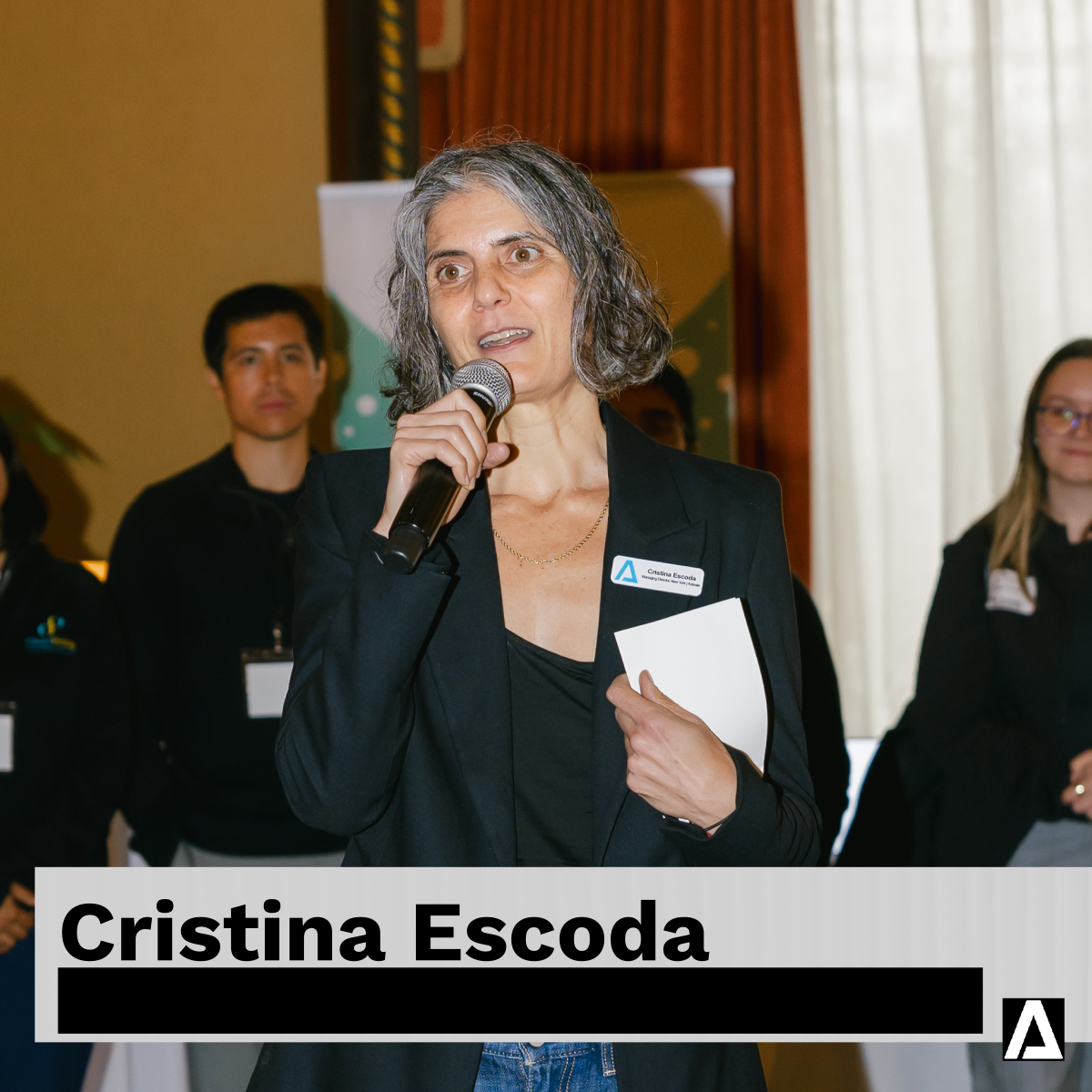 Every panel came back to those gaps. Cristina Escoda, managing director of Activate New York, added a gap that comes first: the scientist. To become a founder, a researcher has to trade certainty for fast, good-enough decisions, technical language for clear storytelling, and lab time for relationship-building.
Tailwind Futures' Resilience Game Changers report shows what's waiting, from passive cooling to solvent-based desalination, all developed in university labs.
The takeaway was blunt: The breakthroughs exist, but too many of them fall through the cracks between lab and market.
From Scientist to Founder: Making the Leap
Research doesn't leave the lab on its own. A scientist has to decide to become a founder, usually without a salary, funding, or a playbook.
Escoda moderated a conversation at Solutions House, the invite-only summit now in its fifth year, with three fellows who recently made that leap: Andrew Wang (Every Electric, Cohort 2024), Ella Csuka (Ecotune, Cohort 2026), and Katie Williamson (Unspent, Cohort 2025).
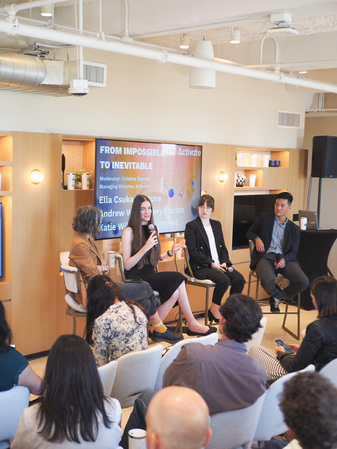 Every Electric lets New Yorkers run their air conditioners on smart power banks instead of the wall outlet, a model that grew from a 65-household Con Edison pilot in 2025 to more than 1,000 homes this summer. Ecotune replaces petroleum-based polyurethane textiles in fashion, interiors, and automotive with 100% bio-based, non-toxic, plastic-free materials, and Csuka was recently named one of 25 finalists worldwide for the Young Climate Prize. Unspent turns spent coffee grounds into a bioplastic ingredient that makes packaging more durable and more resistant to moisture and oxygen, and the company was selected for the National Science Foundation's Regional I-Corps program through the New York I-Corps Hub.
All three founders spoke candidly about turning a lab-scale result into something that works at commercial scale. The audience included chief sustainability officers, policymakers, investors, and philanthropists—the people who decide what gets funded, adopted, and built next.
At this stage, risk is highest and support is thinnest. This is also the stage where Activate works, supporting scientists from their first questions about commercialization through the leap to founding a company. The Activate Fellowship backs them as individuals, at the earliest stages of their founder journey, with 24 months of funding, training, mentorship, and community.
Then it works: Activate’s Hard Tech Showcase


.jpg?width=1200&length=1200&name=YKPH1818%20(1).jpg)

At Live from the Future, Activate's fifth annual hard-tech showcase, more than 55 companies—Activate Fellows, alumni, and ecosystem partners—brought working technology into one room for Climate Week attendees to experience up close. Demand far outpaced space: more than 1,800 people requested a spot, but the venue could fit only about one in three. The 30 Activate Fellow-led companies on the floor spanned nine cohorts, from 2018 to 2026, and seven scientific areas: chemistry and materials, energy and power, industrial biotech and life sciences, critical minerals and resource recovery, electronics and sensing, food and agriculture, and infrastructure and the built environment.
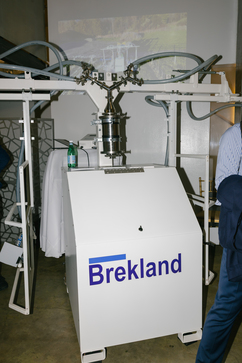 Guests walked into Brekland's (Eric Bellefroid, Cohort 2023) full agricultural treatment system, the largest demo in the showcase's history. Brekland makes an insulating foam that farmers apply within 24 hours of a frost. Made from five naturally derived ingredients, the foam protects buds in two ways: its closed-cell structure insulates them, and the water inside acts as a "thermal battery" that delays freezing.
Deco Labs (Natalie Rubio & John Yuen Jr., Cohort 2026) brought balloons showing the CO₂ mitigated by just a few milligrams of cAlbumin, its animal-free alternative to albumin, used as cell culture ingredients for biomanufacturing. C&EN featured the product in its Climate Week NYC coverage.The demos drew the crowd, but the connections lasted beyond the night. “[I] managed to get the attention of some where cold emails have not worked,” said Iria Mostrou (Biosimo, Cohort 2025). Momcilo Gavrilov (SHARP Diagnostics, Cohort 2024) used the showcase to test his demo and adapt his pitch from health tech toward environmental screening. “The event also helped me make new connections with investors and other stakeholders,” he said, “and I am still following up on several of those conversations.”
The value reached beyond Activate’s own fellows. Brian Mendoza of Molhill Inc., one of the ecosystem partner companies on the floor, said, “I was able to get many useful introductions from investors. The event was also really helpful in being able to be in conversation with investors and answer their questions quickly.”
At the showcase, “someday” became something people could see, touch, and ask hard questions about. With three times more people asking for a spot than the room could hold, the appetite is clear. The next step is giving more science founders a room like this.
Someone Has to Back it: Funding Science Before it’s a Company
None of this moves without people willing to fund science before it becomes a company. On September 23, Activate joined The Engine, LabStart, and Azolla Ventures to host Common Denominator: How Philanthropy Unlocks and Scales Climate Innovation at the ILA Penthouse in Chelsea. About 70 guests, most of them philanthropists and funders in climate and hard tech, came to see how the pieces of the ecosystem fit together.


Each host uses philanthropic capital differently, and fills a different gap on the path from discovery to deployment. Shereen D’Souza of Skyline Foundation and Emma Frawley of Woka Foundation opened with how funders can back that path as a whole rather than one organization at a time. In a panel moderated by Alex Wilkins of the Cisco Foundation, Activate CEO Cyrus Wadia and leaders from LabStart, The Engine, and Azolla Ventures mapped what it takes to move research out of a university lab and into a company that can attract follow-on private investment.
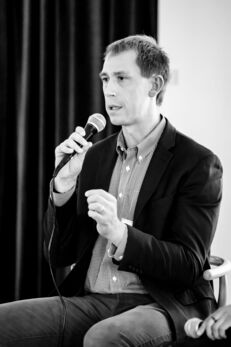 Two founders showed what that path looks like in practice. Brendan Smith (SiTration, Cohort 2020) is also a former resident and Blueprint alum of The Engine, and the founder of an Azolla Fund I portfolio company. Sebastian Garcia-Medina, founder of Khaya Biosciences, is a 2026 LabStart Fellow. Their conversation centered on community: when you’re surrounded by others working on hard problems, you can keep going for the long haul.
When science founders thrive, the whole ecosystem does. Thank you to our co-hosts, panelists, and guests, and to the philanthropic partners who make this work possible.
Then it Scales: Lessons from Fervo Energy to Twelve
Scaling brings a different set of problems. At the Carbontech Summit, hosted by the Carbontech Development Initiative, speakers focused on the financing, accounting, and verification infrastructure that turns a working technology into an industry. At the Nest Campus, Tim Latimer (Fervo Energy, Cohort 2018) and Etosha Cave (Twelve, Cohort 2015) described what scale looks like years after the fellowship ends. Latimer is building next-generation geothermal power, and Cave is turning carbon emissions into products the world already uses.
The Whole Arc, in One Week
Latimer and Cave were once where Csuka is now: scientists with a breakthrough and a decision to make. They didn't cross that distance by luck. It took time, capital, training, and a community that stays with you from the first year to the 10th.
Apply to the Activate Fellowship
If you're a scientist or engineer ready to take your breakthrough out of the lab, applications for Cohort 2027 of the Activate Fellowship are open through October 30. Over two years, Activate Fellows receive funding, entrepreneurial training, mentorship, and a lifelong community, and Activate takes no equity.
