

Meet Activate's First Global Fellows: Singapore
September 8, 2026
For over a decade, Activate has backed scientists and engineers whose ideas were too early, too risky, or too ambitious for anyone else to fund. Today, through partnership with Nanyang Technological University (NTU), that model takes its first step outside the United States by welcoming the inaugural cohort of Activate Global Fellows in our Singapore community.
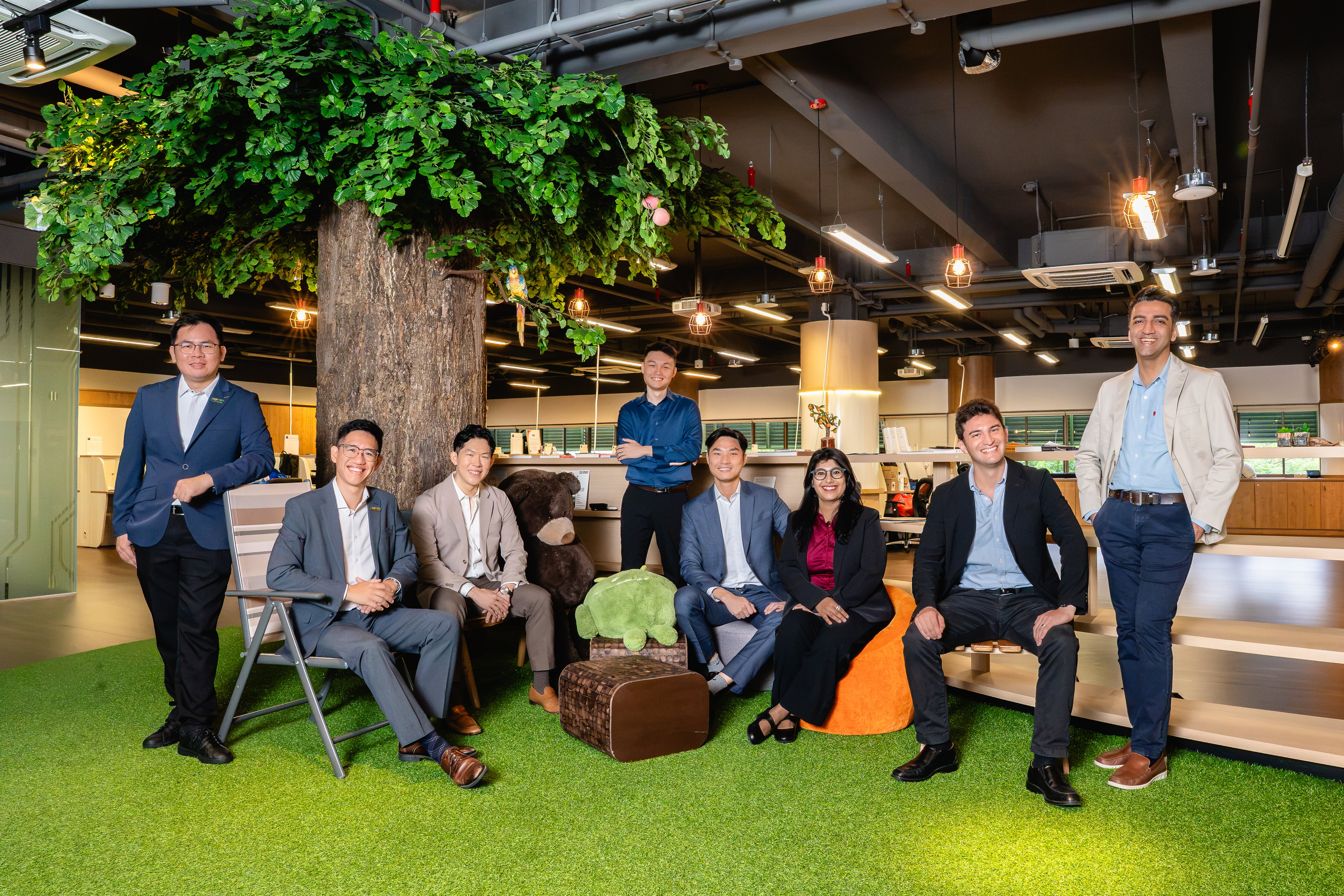 Meet the inaugural cohort of Activate Global Fellows in our Singapore community.
Made possible by funding from Singapore's National Research Foundation (NRF) and supported by Enterprise Singapore, the Activate Global Fellowship in Singapore is our first fellowship beyond U.S. borders. This expansion is not a departure from our model that's launched over 275 companies and $5.5B in follow-on funding, but the first validation of expanding the model to a new global ecosystem. The same rigor, the same conviction that scientists deserve real support to become founders, now put to work in a new country.
Singapore was a deliberate choice: a country investing seriously in R&D, home to world-class research institutions, and positioned at the crossroads of global trade and technology. The recruitment and selection process brought together strong supporters of Singapore’s scientists including representatives from Agency for Science, Technology and Research (A*STAR), National University of Singapore, Singapore Management University, and Singapore University of Technology and Design. With their help, Activate set out to find the scientists ready to bring deep-tech breakthroughs out of the lab. Five transformative technologies stood out.
Four of the five ventures came through Singapore's National Graduate Research Innovation Programme (National GRIP), which helps researchers turn university and institute research into deep-tech startups—a pipeline that fed directly into this inaugural cohort.
"Deep-tech companies are built differently," said Cyrus Wadia, CEO of Activate. "Scientific founders need time to prove that their technology works, but they also need early exposure to customers, capital and partners who understand the journey from science discovery to market. Singapore's extraordinary commitment to research and innovation has built a world-class base of science and engineering talent. This partnership is about helping that science accelerate out of the lab and into companies that can compete globally.”
"Singapore has strong research institutions and deep-tech talent, but scientific discoveries create their greatest impact when they can make the journey from the laboratory into the market," said Professor Louis Phee, vice president of innovation and entrepreneurship at NTU Singapore. "Through the Activate Global Fellows – Singapore, NTU is bringing together the strengths of our national research ecosystem and Activate’s international network to give promising founders in Singapore a stronger pathway to build and scale their companies."
The Fellows


AeroFlux — Industrial carbon capture is one of the hardest levers to pull on climate—hard-to-abate industries account for roughly 24% of global CO2 emissions, and existing capture technology is too costly and bulky to retrofit at scale. AeroFlux is developing next-generation membrane technology that could cut carbon capture costs by up to 80% and shrink system footprint by up to 90%, making retrofits realistic for the industrial facilities that need them most.
CRecTech — Green methanol could fuel the maritime, aviation, and energy sectors—if it weren't so costly and scarce to produce. CRecTech's CRecREF catalyst technology converts waste biomass and biogas into bio-methanol through a simplified, modular process that can be deployed right at the source of the waste, unlocking value from resources that are otherwise flared or left unused.
Healbac — As antimicrobial resistance spreads, industries still lean on the antibiotics and chemical preservatives that are losing effectiveness. Healbac is developing non-antibiotic approaches that aim to reduce reliance on conventional antibiotics and chemical preservatives. The startup is currently validating potential applications in veterinary wound and skincare, and exploring broader use cases in food preservation.
LAPIS — Metal 3D printing has the potential to transform how complex parts get made, but hazardous metal powders and heavy post-processing keep it out of reach for most labs and smaller companies. LAPIS replaces powder with thin metal sheets, laser-welded and cut layer by layer—making advanced metal additive manufacturing safer, simpler, and dramatically more accessible.
LoopForBio — Aquaculture feed still leans heavily on fishmeal from wild fisheries, driving ecological pressure and price volatility. LoopForBio converts nutrient-rich liquid byproducts from food processing into CircuProtein™, a lower-carbon aquaculture ingredient that has matched or beaten fishmeal performance in shrimp and seabass feeding trials—turning a waste stream into a scalable alternative protein source.
Why This Matters
Five ventures, five very different deep-tech problems—carbon capture, green fuels, advanced manufacturing, alternative protein, antimicrobial resistance. Our first cohort of Activate Global Fellows showcase the same diversity of hard science that's always defined Activate's fellows, now showing up in a new part of the world.
This isn't just our bet on Singapore—it's Singapore's bet on Activate’s model. When the program was first announced at SWITCH 2025, Deputy Prime Minister and Minister for Trade and Industry Gan Kim Yong named the gap this program fills: founders need more than technology to get from lab to market—they need time, mentorship, and access to resources. Activate’s first global fellowship is a vote of confidence from a government that has spent three decades building research foundations and a vibrant innovation ecosystem—and one more sign that the hardest part of deep tech isn't the science. It's everything that has to happen after the science, for it to succeed.
“These founders didn't set out to become entrepreneurs. They set out to solve problems most people had written off as unsolvable,” said Vivek Nair, managing director of Activate Global - Singapore. “Our job—in Singapore just as it's been in the U.S. for over a decade—is to give them the funding, training, and community to make that leap with confidence.”
What's Next
This cohort is just the beginning of Activate's presence in Singapore, with room for up to 40 fellows across three cohorts over the next three years. In the coming months, these fellows will be building toward U.S. immersion visits on both coasts, The first will take place in San Francisco and Silicon Valley from October 17 to 25, where the founders will meet potential customers, investors and industry partners from the Activate community.
Interested in meeting the Activate Global Fellows when they visit the U.S.? Express interest
They'll also be on the ground at EnterpriseSG's SWITCH conference in October. SWITCH brings together founders, investors, and policymakers from across Southeast Asia and beyond, making it a natural stage for our global fellows to connect with the broader innovation ecosystem.
