

Singapore's Deep Tech Founders Take On the Bay Area: What the First Activate Global Fellows Learned
November 18, 2026
Fellows from Singapore's first Activate Global Fellows cohort spent a week with Activate alumni, U.S. deep tech investors, and Bay Area partners, then brought those connections home to SWITCH.
Ezequiel Santillan (LoopForBio, Cohort 2026 Global Fellow) first sat down with Gene Cho, a general partner at Valuence Ventures, in the Bay Area. Days later and nearly 8,500 miles away, they met again at SWITCH, Singapore's flagship innovation event—this time with LoopForBio CTO Soheil Neshat at the table.
"We picked up the conversation where we'd left off in the Bay Area," Santillan said.
That handoff between two innovation ecosystems is what the trip was built for. From October 18 to 24, the inaugural Activate Global Fellows – Singapore cohort tested their science-based companies in Berkeley, San Francisco, and the Silicon Valley. They met potential customers, U.S. deep tech investors, and Activate alumni who had made the same leap from researcher to founder.
Nanyang Technological University, Singapore (NTU Singapore), hosts the deep tech fellowship in partnership with Activate, with S$12M in funding from the National Research Foundation, Singapore, and support from Enterprise Singapore. This was the first of two U.S. immersions built into the fellowship, and the first time an Activate cohort from outside the United States joined an Activate community on the ground.
Here are three lessons Singapore's deep tech founders brought home.
Lesson 1: For deep tech startups, pivots are the norm


The fellows spent much of the week inside the labs of Activate Fellow alumni. In Emeryville, John Slack (Rhoic, Cohort 2024) and co-founder Ashley Bernstein walked the group through Rhoic's nanomanufacturing process, which began with fuel cell manufacturing, and the path from lab to company.
In San Leandro, Patricia McNeil (Westwood Aerogel, Cohort 2023) and Hitesh Manglani (Supercarb, Cohort 2024) opened their labs at The Gate 510. McNeil's team makes low-cost, high-performance aerogel insulation. Manglani's company turns waste biomass into high-performance, low-impact fibers. Both founders shared candid stories about the early years.
Simon Goh (LAPIS, Cohort 2026 Global Fellow), whose company is developing powder-free metal 3D printing, took away a clear lesson.
"Pivots in business model, ideal customer profile, target industry, or main product offering are the norm rather than the anomaly," Goh said. "To get clarity, do loads of customer discovery and continuously challenge your starting hypothesis. The model that's easy may not be the model that makes money."
Lesson 2: US deep tech investors will back early science—if you show what you've proven
Venture capital works differently in the United States, so the week started with the fundamentals. Vivek Nair, managing director at Activate, and Jon Kiel, senior manager of startup and ecosystem development for the Builder Platform at The Engine, led a session on VC math: the key terms, how a fund’s economics work, and how those economics shape what investors look for.
Fellows then tested that knowledge with two deep tech investors. Mark Cupta, managing director at Prelude Ventures, hosted the cohort at the San Francisco Ferry Building. Josué López, a principal at DCVC—and a former deep tech founder and Activate Fellow alum—met with the group in Palo Alto.
Those conversations changed how Santillan thinks about risk. LoopForBio grows microbial protein from food-manufacturing byproducts to replace fishmeal in aquaculture feed.
"What stood out was how willing some investors were to back promising science early," Santillan said. "When you can explain what you've already proven and what the next round of funding will help you test, investors can see a path from the science to a business."
Over three days, fellows also met one-on-one with leaders from Hyundai CRADLE, Aucap, MTM Venture Partners, Valuence Ventures, Dentons, BEAM Circular, and Enterprise Singapore. They spoke with Raj Kondur, co-founder of ChrysCapital, about investment, strategy, and building an organization.
One of those meetings introduced Santillan to Cho. "Our work at LoopForBio sits at the intersection of biotech and cleantech, so there was plenty of overlap with the kinds of technologies Valuence looks at," he said.
Lesson 3: How you communicate your science matters as much as the science
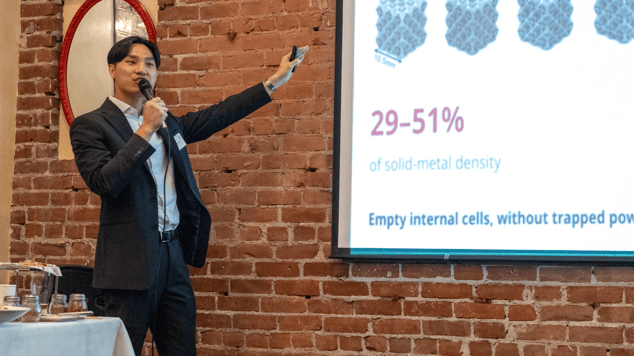
Simon Goh, co-founder of LAPIS, presents during Activate’s Meet the Cohort event in Berkeley, CA
Fellows practiced their pitches all week with feedback from Jill Fuss, managing director of Activate Berkeley, and the Activate team. On Wednesday, each fellow delivered a mini-pitch at Revival Bar + Kitchen in Berkeley to deep tech investors, founders, industry partners, and members of the Activate Berkeley community.
Avinanda Banerjee (Healbac, Cohort 2026 Global Fellow) develops non-antibiotic approaches to microbial control, starting with veterinary wound and infection care and expanding into food. For Banerjee, the week made one lesson clear.
"How you communicate your science is just as important as the science itself," Banerjee said. "Being able to translate complex technology into a compelling story that resonates with investors and industry partners can open doors to meaningful collaborations and accelerate growth."
Banerjee is already sharing that story at home. In November, The Straits Times featured Healbac’s antimicrobial peptides, which the company is testing with six veterinary clinics in Singapore as a topical treatment for skin infections in cats and dogs.
Plugging into the Bay Area innovation ecosystem
On Wednesday afternoon, the fellows sat down for an open conversation about doing business in the United States with Enterprise Singapore’s U.S. team: Ken Mun Wong, regional director; Nicholas Lee, senior business development manager; and Peter To, business development manager. The team shared what they’ve learned helping Singapore companies expand into the U.S. market, how Enterprise Singapore supports those companies once they arrive, and the programs and funding options, including U.S.-Singapore opportunities, that founders can draw on when they’re ready to establish a U.S. presence.
The next day, the cohort joined about 35 fellows from Activate and Bakar Labs, plus partners from Cyclotron Road, at Bakar Labs for a roundtable, a speaker series, facility tours, and a reception. At House of AI in San Francisco, they met Singapore founders now building companies in the United States, at a roundtable hosted by the National Research Foundation, Singapore, and the National University of Singapore.
The week closed on October 23 at the Computer History Museum in Mountain View. There, NTU Singapore held its first Tech Summit and Alumni Conference in the United States, drawing NTU alumni including Intel CEO Tan Lip-Bu and Western Digital CEO Irving Tan.
Activate CEO Cyrus Wadia, joined a panel on taking Singapore deep tech into international markets. He was joined by Louis Phee, NTU vice president of innovation and entrepreneurship; Brian Dow, CEO of NTU spin-off Amperesand; and Zhaoxi Chen, CEO of robotics startup Ropedia.
Bringing the Bay Area home: Activate Global Fellows at SWITCH Singapore
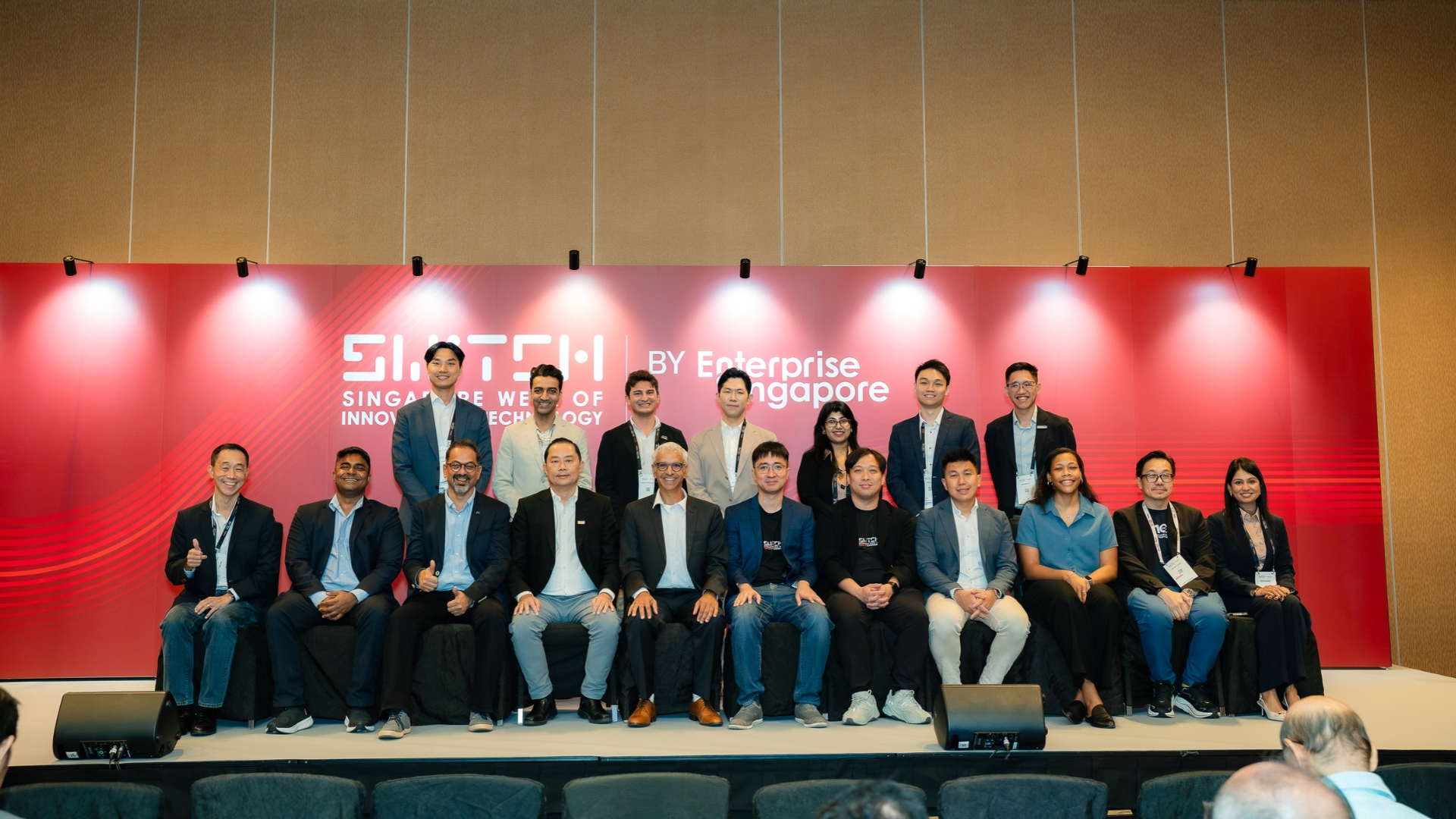
Activate Global Fellows pictured with staff and leaders from Activate, NTU, the National Research Foundation, Singapore, and Enterprise Singapore during Enterprise Singapore’s 2026 SWITCH Conference in Singapore.
Last year, Singapore's Deputy Prime Minister Gan Kim Yong announced the Activate Global – Singapore Fellowship at SWITCH. This year, the fellows returned to the event as a cohort.
About 140 funders, investors, university leaders, and fellow founders packed the room for the cohort’s launch event on October 27. Phee and Wadia spoke, along with leaders from the National Research Foundation, Singapore, and Enterprise Singapore. Vivek Nair, managing director at Activate, and Anuj Jain, director of National GRIP and Activate Global Fellows SG at NTU, introduced the fellowship and its next cohort.
Each fellow then gave a seven-minute pitch, followed by an hour of networking. That's where Santillan reconnected with Cho and introduced him to Neshat.
On October 29, one year to the day after the fellowship was announced, Heng Swee Keat, chairman of the National Research Foundation, Singapore, visited the Activate booth. After speaking with Wadia, he spent several minutes with each fellow learning about their technology.
Kang Hui Lim (CRecTech, Cohort 2026 Global Fellow) also spoke on a SWITCH panel about working at a deep tech startup.
What's next for Singapore's deep tech fellows
The cohort left the Bay Area with sharper pitches, new investor and partner relationships, and a direct line into Activate's lifelong community of 280+ companies. They return to the United States for their second immersion in 2027, with conversations like Santillan's already in motion.
