

Moments that Matter: Every Electric for Every NYC Household
March 18, 2026
Celebrating the turning points that define our current and alumni fellows’ journeys.
Every Electric (Cohort 2024) is offering a first-of-its-kind opportunity for everyday consumers in the face of rising electricity costs, while becoming one of Activate’s most iconic pivot stories.
Every Electric co-founders Andrew Wang and Richard May first met in 2017 at Tesla, where they worked together designing battery cell chemistry for the Model 3. Years later, they found themselves in the same postdoc lab at Columbia University, and they reunited to co-found a new venture.
The founders entered the Activate Fellowship with a vision to develop and commercialize a novel battery manufacturing technology. They had already established a successful MVP when their perspective changed.
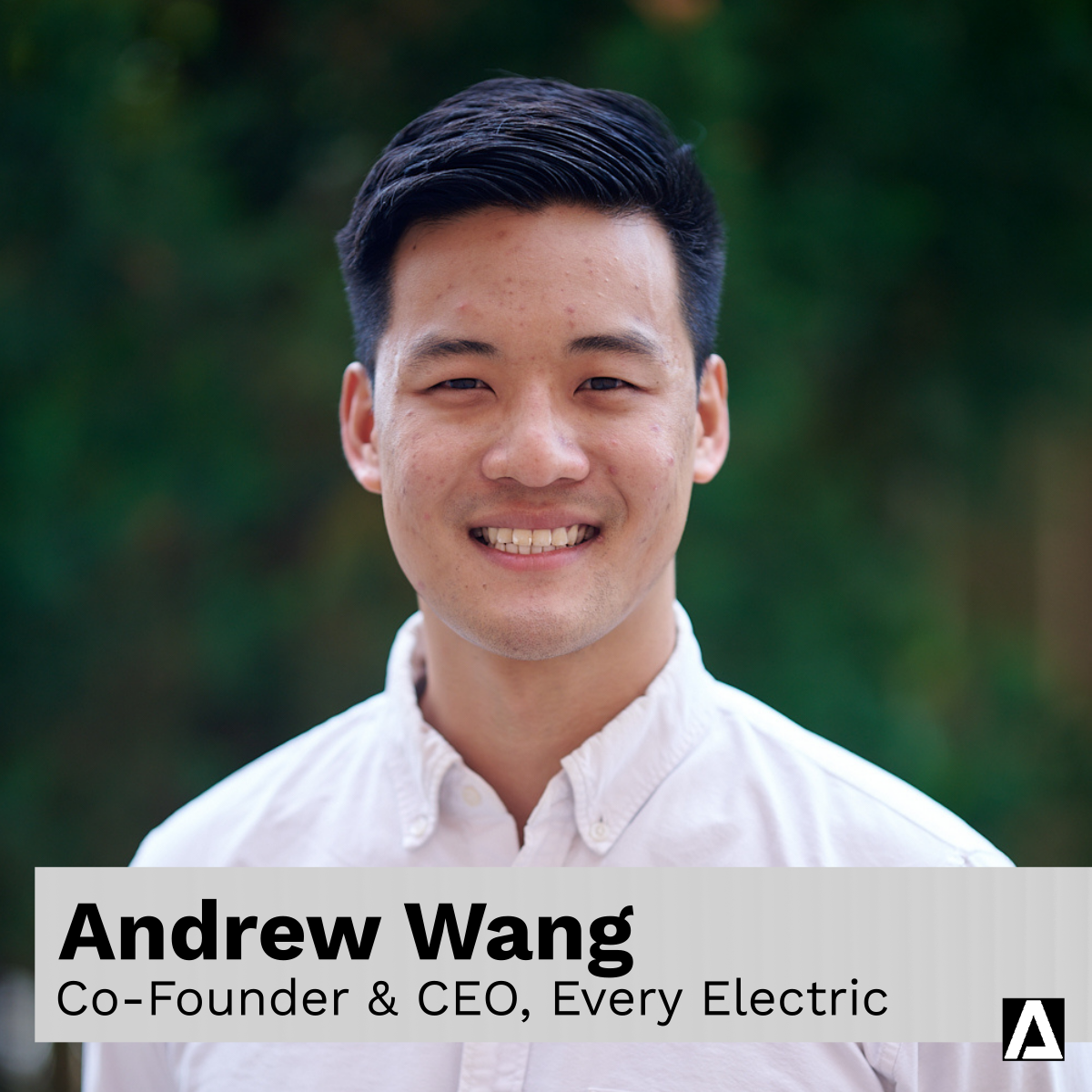
“I started hearing on the news all of this concern around rising electricity rates and folks not being able to pay their utility bills on time,” says Wang, Every Electric co-founder and CEO. “It felt like we had hit on a pain point not just in the deep-tech space, but for the country in general.”
Wang and May realized there was a solution they could put into people’s hands immediately—not by continuing to develop their own novel technology, but by leveraging existing technology on the market in a new way.
They could create grid flexibility by deploying consumer battery systems to everyday households.
The team rebranded as Every Electric and got to work on their plan to provide powerbanks to New York City residents, who would simply plug their A/C units into the powerbanks instead of the wall. The powerbanks would charge during non-peak hours and automatically switch to powering A/C units during peak demand, reducing strain on the grid, earning money for residents, and providing backup power during outages.
In a remarkably fast pivot, Wang and May set up a pilot just in time for summer 2025, when A/C units in New York City would be working overtime and the grid would be the most strained. Data from the ~200 kilowatt hours of batteries they deployed validated their new business model, giving them the conviction to move forward with a larger deployment.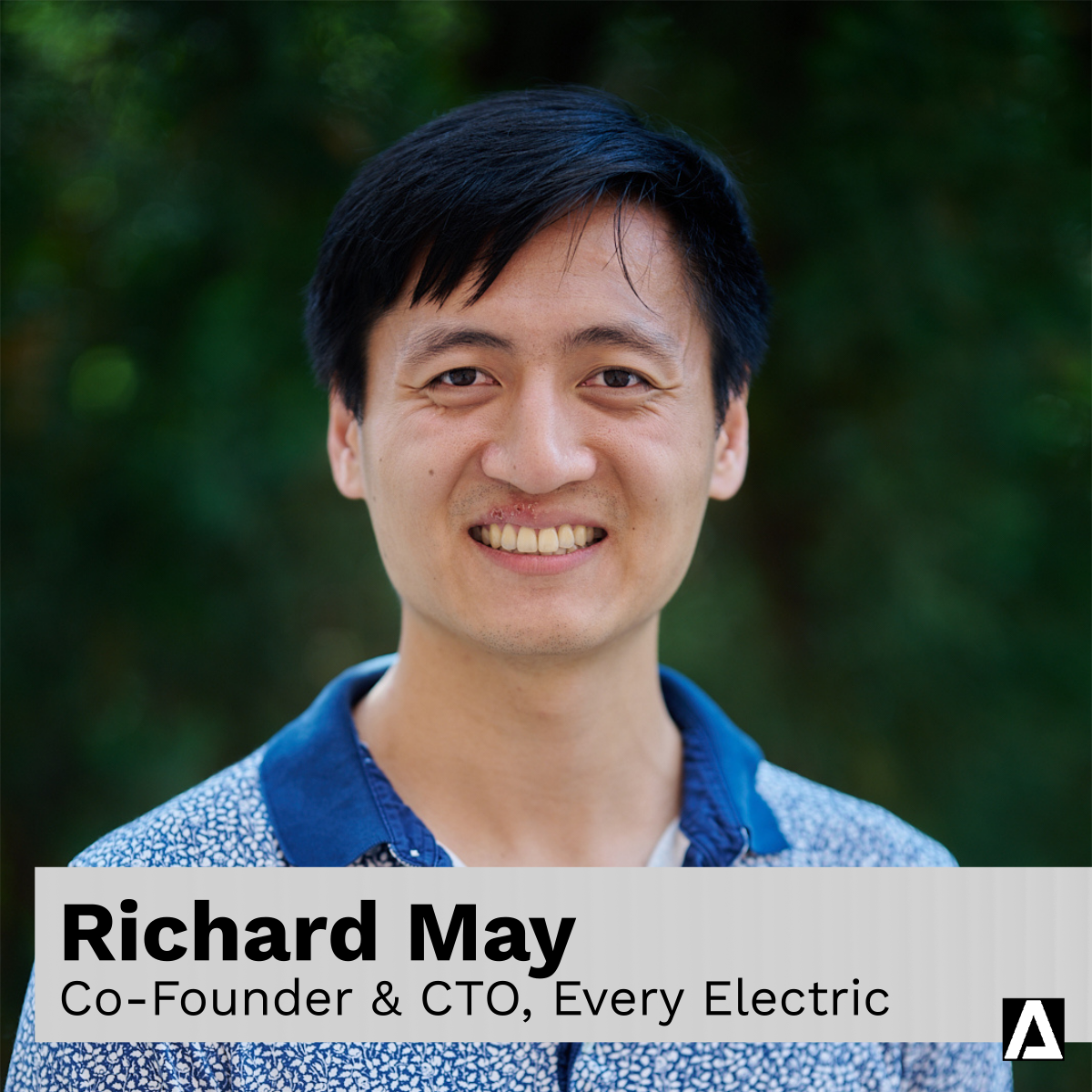
“We did this basically over the course of three or four months last year,” says May, Every Electric co-founder and CTO. “A full pivot from working on battery manufacturing technologies to operating batteries on the grid is a crazy thing to get done in that span of time.”
Now, a year later, Every Electric has grown to be a team of seven and has an exciting new offering this summer. The company recently announced its Summer 2026 free A/C powerbank program in partnership with Con Edison—a first-ever opportunity for New York City residents to join the largest smart electricity network designed for everyday households.
Every Electric has big plans for the future. But for now, their solution is simple and effective. “We saw clearly how this tech is able to address something we’re feeling every day,” Wang says. “It was the fastest path to impact.”
We talked to Wang and May about how they leveraged their battery know-how and made a whirlwind pivot to deliver relief to New Yorkers and beyond.
What is your proudest moment so far?
Andrew Wang:
What we're continuing to prove with Every Electric is that oftentimes it's not just about the science behind the technology, but that there's also a lot of juice to squeeze in making it easier to deploy technologies.
We're taking a simple battery that you can order off of Amazon and plug in, but we're putting software controls in it and deploying it in an easy way which gets it plugged into new places.
What we're most proud of is that in a matter of three months, we went from zero batteries deployed to deploying New York City's largest fleet of energy storage residential virtual power plants, and we’re continuing to build on that.
How did Activate accelerate your path to deployment?
AW: Activate's financial support allowed us to buy that first batch of batteries that we put out in the spring 2025 so that we could validate it. If we didn't have that proof point this time last year, we would still be sitting here scratching our heads saying “hey, these numbers look interesting” without any hard data. That support was a massive catalyst.
Activate's financial support was a massive catalyst.
How are you measuring your impact?
AW: Our North Star metrics are dollars saved for the participants in our program, how much money can we earn for them on the grid to put back into their pockets, how much money can we save from infrastructure upgrade deferrals for our utility partners, and then the speed of deployment—how many megawatt hours can we get out there in a week, in a month?
So, speed to flexibility onto the grid and then ultimate dollar impact for both residents and utilities are what we aim for.
What made you pivot from battery manufacturing to making a product for everyday consumers?
AW: It’s been a dynamic time for the upstream value chain for batteries and energy storage during our fellowship. The world's largest tech bust bankruptcy was a battery manufacturer in Europe, right? And we're a little leaf blowing in that wind.
At the same time, we’re seeing everyone freaking out over the cost of electricity and the cost of living. And I think that is particularly acute here in New York City where we're based, and where we're paying our own electricity bills every day and seeing that impact.
These were the perfect ingredients for finding a really interesting product-market fit.
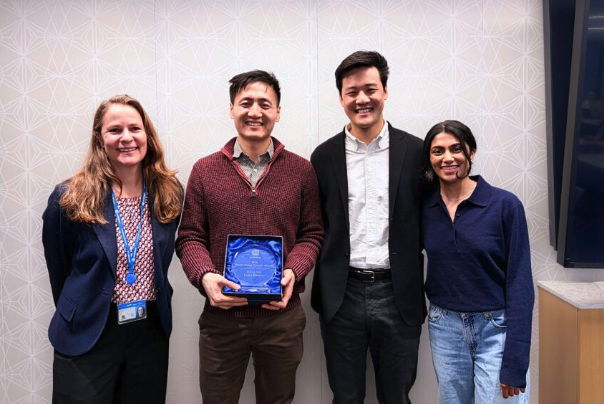 Every Electric won the 2025 Con Edison Smart Usage Partner Rising Star Award. Picture taken from LinkedIn.
What has been the biggest challenge in making that shift?
Richard May: Each earlier iteration of our company had been in the big industrial manufacturing space where your customers are the folks making batteries on the billion-dollar gigawatt-hour scale.
We shifted from that to catering to the needs of the everyday rate payer, who is mostly concerned about how their utility bills are going up, how much space the device we’re marketing to them is going to take up in their apartment, and if they have to do anything to operate or troubleshoot it.
It’s been a big change in mindset, but I’m all for it, getting to interact with and solve problems for these folks on a daily basis.
What does success look like for you in the next 12-18 months?
RM: The goal this summer is to put out at least a thousand units. So we're 10x-ing our number from last summer.
AW: Looking at the 12 to 18 month horizon, it’s about cementing that we have a proven product by demonstrating enough proof points around the business model, the product, the technology, and the user experience.
Can we prove that this is just as reliable and just as valuable as that big solar farm battery sitting out in the distance, but being right here instead?
Do you have plans to expand beyond New York City?
AW: It's pretty clear to us that New York is not the only market or grid where electricity costs are a challenge and operating costs for grid operators are also ballooning.
What excites us is that if you can prove it in New York—where, for example, the congestion on the grid is particularly acute—then this is a model that can also map onto other markets. People talk about PJM territory, where all the data centers are cropping up and soaking up all the electricity. How are residents and other rate payers there going to fight for their space on the grid? I think we have a particularly strong solution for them.
We’ve already seen a lot of success coming out of last year’s pilot, and utility innovation teams are asking how they bring this into their markets. We're having a lot of really exciting conversations, and I think it’s important that we get more and more people to see that these simple solutions can go a long way.
What would you tell someone who is considering applying for the Activate Fellowship?
AW: Activate is pretty unique. We’ve done a lot of accelerator programs, oftentimes in tandem with Activate, and I think there’s something very special about the culture and curriculum that Activate has cultivated. I would tell a new founder not to hesitate to apply. Even going through the application process teaches you a lot.
RM: As a founder, it's really important to distinguish signal from noise, right? You don’t have any minutes to waste on programming that’s not useful. Activate doesn't have any of that noise. Having run a deep-tech accelerator program for over ten years, they know exactly what you need to know and what you don’t.
And the community is unmatched. Having been in the business for that long, their list of alums that can be helpful via Slack or in person is just insane.
AW: Yeah, you can look up billion-dollar CEOs now and see them asking “Which accountant should I choose?” like 10 years ago in an Activate Slack channel. Where else are going to get that?
