

From the Activate Fellowship to the World's Largest Energy Storage Projects
May 25, 2026
Hard tech is graduating from promising to proven—and Activate Fellows are at the center of the shift.
Activate Fellows enter the fellowship with two years of funding, resources, and community—time to fully de-risk their technology before the market is ready to engage. That foundation is what allows them to move with speed and confidence when the moment to scale arrives.
Two Activate Fellow companies are making that case better than any policy paper or market forecast could.
Antora Energy just commissioned one of the world's largest energy storage projects—going from an empty lot to a fully operating production system in under 12 months. Noon Energy just announced a 1 gigawatt energy storage agreement with Meta Platforms, the largest of its kind in the long-duration storage market. These are not incremental milestones. They are proof points—for the technologies, for the companies, and for what the Activate model of early-stage science entrepreneurship makes possible.
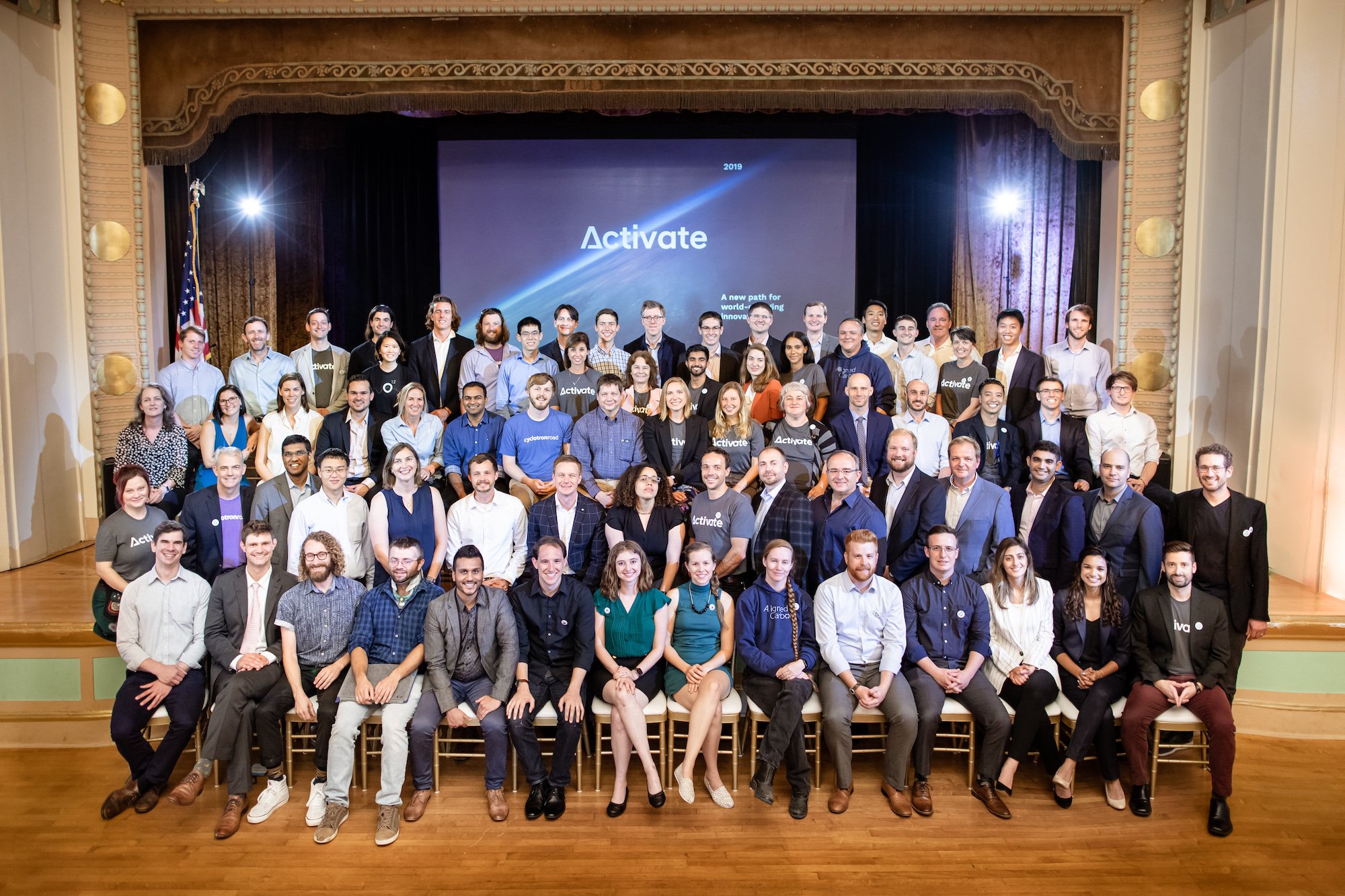 Activate Fellows from Antora Energy and Noon Energy with the Activate community in 2019.
Antora Energy Commissions One of the World's Largest Energy Storage Projects
Antora Energy didn't start as one company. David Bierman (Cohort 2017) entered the fellowship as a leading expert in thermophotovoltaics, already working on what zero-carbon industrial heat could look like. Andrew Ponec (Cohort 2018) had been thinking about energy systems and climate change since childhood—he was finishing his undergraduate studies at Stanford when he met Justin Briggs (Cohort 2018), a Ph.D. in applied physics with a decade of renewable energy research experience. Ponec and Briggs joined the Activate Fellowship in 2018. When the three met through the Activate community at Cyclotron Road and compared what they were each building, the overlap in technology and vision was undeniable. They combined into one company. "I believe startups have an incredible ability to change the world," Ponec said when he entered the fellowship. "And I think Antora will do that." Antora Energy took shape through the fellowship.

The target was enormous. Manufacturing accounts for 30% of global greenhouse gas emissions—driven almost entirely by combusting coal and gas to produce power and heat. Antora Energy was built to eliminate that dependency.
The concept: store surplus wind and solar electricity as heat in solid carbon blocks, then release it on demand as electricity or industrial process heat up to 1,500°C. Solid carbon is one of the safest, most stable materials on earth. The system is modular, designed to scale from megawatts to gigawatts, and deployable at the facilities that need it most.
Activate provided the lab resources, financial support, and early commercialization mentorship the founders needed to develop and de-risk that concept before traditional funders were ready to engage. "Since day one, Activate has been one of Antora Energy's biggest supporters," said Briggs. "Activate provided essential lab and technical resources and financial support that allowed us to focus on the company." That foundation made everything that followed possible—a $50M raise from Breakthrough Energy Ventures and Lowercarbon Capital, a $14.5M ARPA-E award, $150M in Series B funding led by Decarbonization Partners, and a partnership with Con Edison to explore decarbonizing New York City's district steam network.
This spring, all of it converged at Project Big Stone. Antora commissioned the system at POET's biofuels facility in Big Stone City, South Dakota—one of the largest energy storage projects in the world. The five gigawatt-hour, multi-day thermal battery went from an empty lot to a fully operating production system in under 12 months, with every battery manufactured at Antora's San Jose gigafactory and a supply chain spanning a dozen U.S. states and supporting over 300 jobs. It also absorbs excess wind energy from the region that would otherwise be curtailed—solving two problems at once.
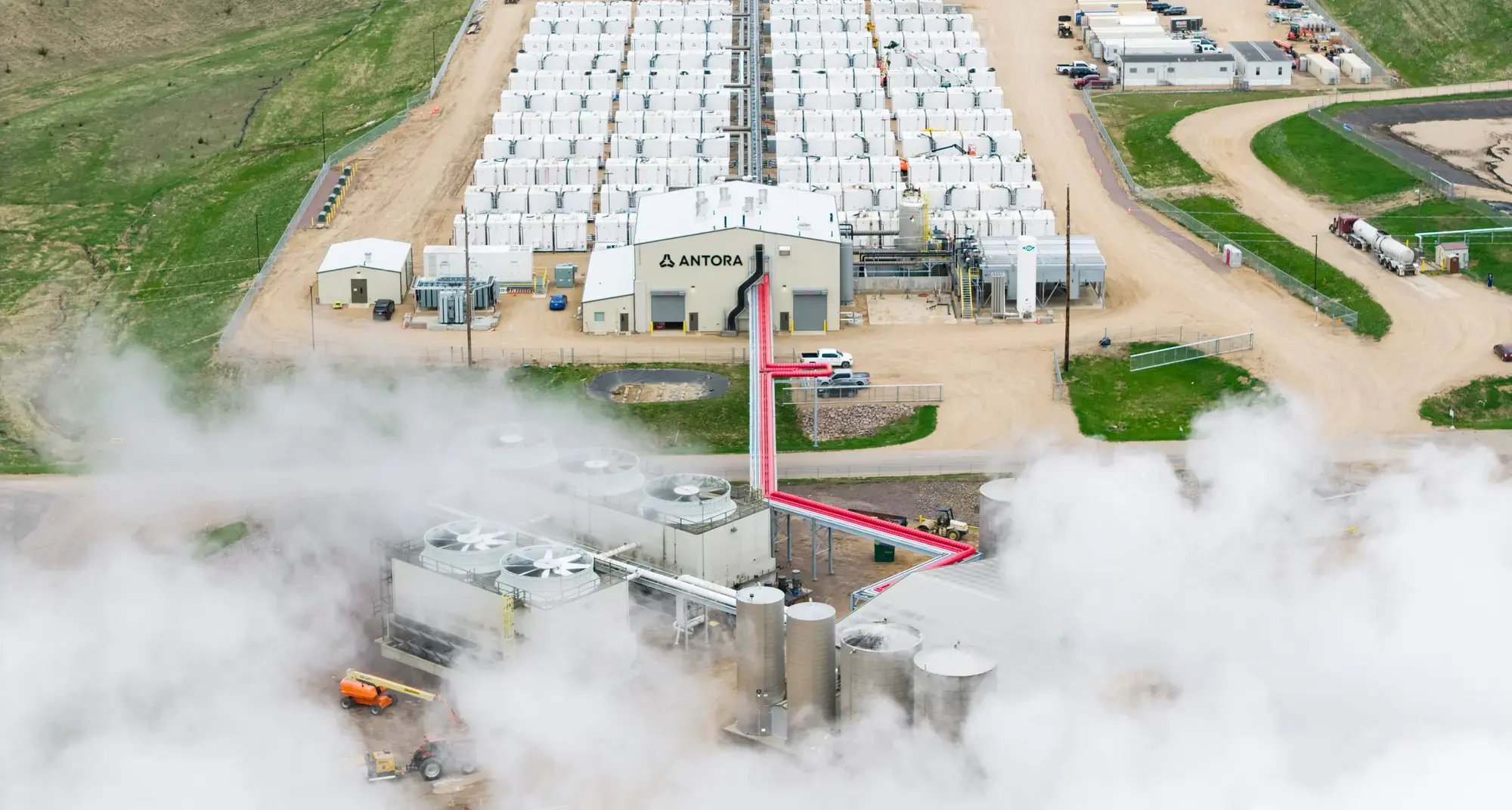 Source: Antora
According to the Long Duration Energy Storage Council, applying renewable-generated heat and electricity storage to the industrial sector could reduce global industrial emissions by roughly two-thirds. Project Big Stone is the first proof that this can happen at production scale, at American speed, with a fully domestic supply chain. POET, the world's largest biofuels producer, now runs on round-the-clock zero-carbon heat and power—and because Antora's system is modular and designed to scale from megawatts to gigawatts, Project Big Stone is a beginning, not a ceiling.
Noon Energy Announces 1 GW Agreement with Meta Platforms—a First for LDES and AI Infrastructure
 Chris Graves (Cohort 2018) arrived at the Activate Fellowship as a senior scientist with deep expertise in electrochemical systems. Graves founded Noon Energy to tackle one of the most consequential unsolved problems in the energy transition: how do you store renewable energy long enough to power a grid through days of low wind and sun—without rare metals, at a cost that works?
Noon's answer is a reversible solid oxide fuel cell system based on carbon and oxygen —abundant, low-cost materials—capable of storing energy for 100-plus hours, with some pilot systems demonstrating upwards of 200 hours. That duration puts Noon in a category most battery technologies cannot reach, making it uniquely suited for the firm, 24/7 zero-carbon power that large, energy-intensive infrastructure demands.
After closing a $28M Series A to build demonstration projects, Noon has steadily expanded its commercial footprint—partnering with Halliburton Labs to accelerate commercialization, signing an MOU with ACWA, a global leader in power and water desalination, for international projects, and being named a top 10 finalist in the Energy Tech Challengers' Energy for AI track.The Meta agreement is a different order of magnitude. Noon Energy and Meta Platforms have announced an agreement to reserve up to 1 gigawatt / 100 gigawatt-hour of energy storage capacity—Meta's first deal ever in the long-duration energy storage (LDES) market, and one of the largest LDES agreements announced to date. A 25 MW / 2.5 gigawatt-hour pilot project scheduled for completion by 2028, followed by a full supply agreement as performance milestones are met. This phased approach—large buyers anchoring emerging climate technologies through long-term offtake-style agreements before full commercial maturity—is becoming the new model for hard tech commercialization. Noon and Meta are helping set that precedent.
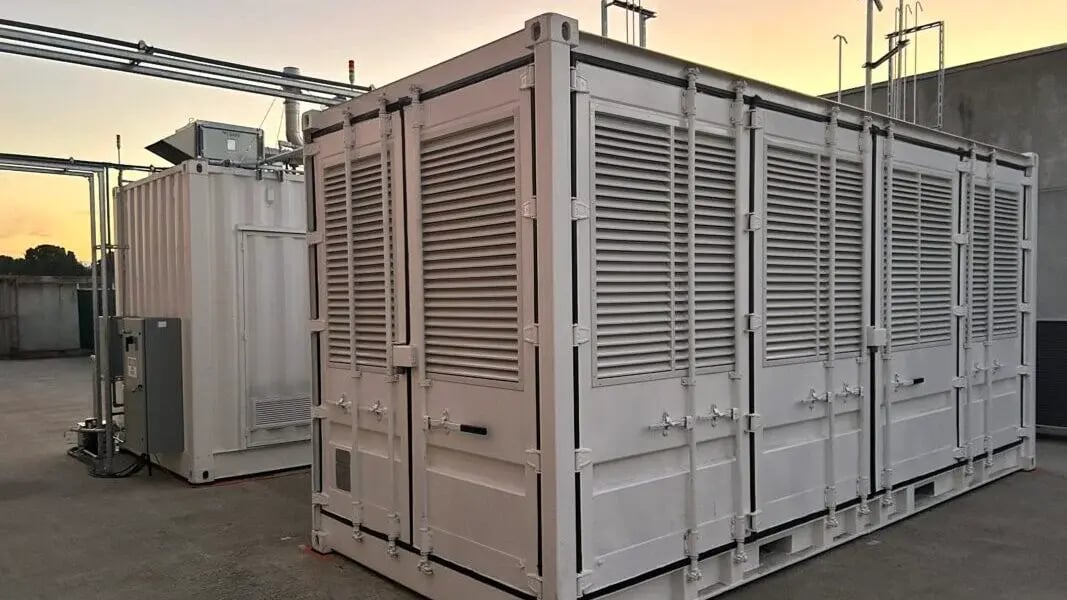 Source: Noon Energy
"Bringing data centers online faster requires rapid deployment of reliable energy sources," said Meta's Vice President of Energy and Sustainability. "Our agreement with Noon advances that goal with a storage technology that delivers grid resilience and firm power."
The broader signal: AI data centers are on track to triple their share of U.S. electricity usage by 2028. The companies building that infrastructure are no longer waiting for conventional energy solutions to scale. They are going directly to hard tech founders—and an Activate Fellow is among the first to earn that bet.
More Fellows Advancing Across the Energy Landscape
Antora and Noon are the headlines this month, but they are not alone. Across storage technologies, battery materials, and supply chain infrastructure, Activate Fellows are reaching commercial inflection points up and down the energy stack.
Electrified Thermal Solutions (Daniel Stack & Joey Kabel, Cohort 2021) commissioned its first commercial-ready Joule Hive™ Thermal Battery system at Southwest Research Institute in San Antonio this month. The system delivers zero-carbon heat at temperatures up to 1,800°C—using low-cost, off-peak electricity — to industrial processes that have historically depended on natural gas. The commissioning, attended by over 50 guests including San Antonio's mayor, demonstrated that high-temperature industrial heat can be electrified at a cost that competes with fossil fuels. That commercial proof point removes the primary barrier that has kept heavy manufacturers on the sidelines.
Anthro Energy (David Mackanic & Joe Papp, Cohort 2021) recently opened its new headquarters, R&D center, and production facility in Alameda, California, and received DOE approval to enter the execution phase of a new advanced electrolyte manufacturing facility in Louisville, Kentucky—backed by a $24.9M DOE grant and $18.4M in IRA investment tax credits. Anthro also signed a partnership with EnPower to build a fully domestic, FEOC-free lithium-ion cell platform targeting 750-plus MWh of production capacity. The company is building a vertically integrated domestic battery supply chain, from advanced electrolyte chemistry to finished-cell production, serving defense, mobility, and energy storage markets.
Tyfast (Haodong Liu & GJ la O', Cohort 2022), a UCSD spinout based in San Diego, develops lithium vanadium oxide batteries designed for fast charging, long cycle life, and cold-weather performance in demanding heavy-duty applications. The company signed MOUs with Bradda Head Lithium and Strategic Resources to secure North American critical mineral supply for its LVO platform, was selected as a winner in the U.S. Army xTech Search 9 competition to demonstrate battery cells and packs for Army aviation, and received its first U.S. patent—covering a low-cost method for producing high-quality LVO anodes.
4th State Energies (Pankaj Ghildiyal, Cohort 2025) recently achieved a 20x increase in production scale, moving from early lab quantities to material volumes suitable for customer evaluation and initial integration. The company received a $1.1M DOE SBIR Phase II grant and a $250K DOD STTR Phase I grant, and appointed Ghildiyal as CEO to lead the transition from technical validation to commercial execution. Its plasma-enabled manufacturing platform is now producing advanced energy storage materials for customers across drone, automotive, and battery markets.
And Fervo Energy—co-founded by Activate Fellows Jack Norbeck and Tim Latimer (Cohort 2018)—became the first Activate Fellow company to go public this year, a milestone that speaks to what this community of science founders is capable of building.
What This Represents
These milestones belong to the scientists and engineers who built them. They are also proof of what becomes possible when a community committed to hard tech for good commits early—before the path is clear, before the market is ready, before anyone can be certain it will work.
Activate makes the first bet. The broader ecosystem builds on it. But the science founders who entered a two-year fellowship with an idea are the ones who commissioned some of the world's largest energy storage projects and signed landmark deals with the companies building the infrastructure of AI. And the fellows in the program today are watching—and building toward their own moment.
Learn more about the Activate Fellowship at activate.org.
