

Moments that Matter: Juno Propulsion’s Technology Is Headed to Space
December 17, 2025
Celebrating the turning points that define our current and alumni fellows’ journeys.
Alexis Harroun’s (Juno Propulsion, Cohort 2023) lifelong passion for rocket propulsion led her to become a rocket scientist, then, a science entrepreneur. Now, as co-founder and CEO of Juno, she’s headed for another launch: testing a new paradigm for propulsion, the rotating detonation engine (RDE), to make space flight more efficient.
Juno’s technology promises a variety of benefits over current technology, which has been stagnant since the 1950s, including reduced carbon emissions, increased cargo space, improved satellite lifespans and maneuverability, and more.
The Seattle-based startup aims to “unlock the full potential of space,” starting with offering the first-ever rotating detonation combustion-based thruster for use in space. Juno is making meaningful headway on its journey to market, with its first in-space demo on the horizon.
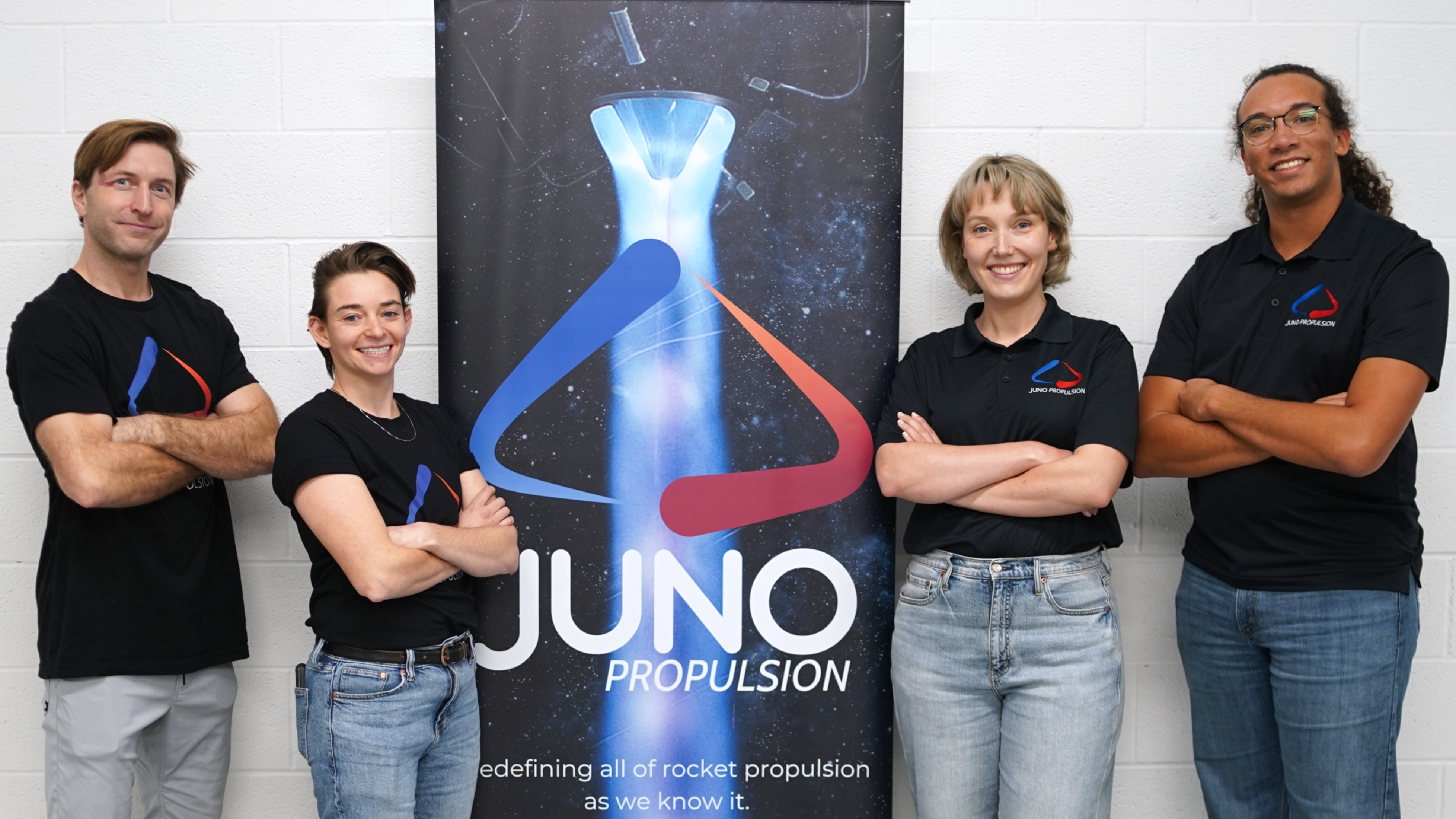 Juno Propulsion Team Photo
We caught up with Harroun about her vision for Juno and the startup’s latest milestones.
What is the latest with Juno?
Things have been going really well. Juno has doubled in size in the past year. We've also moved into our own space, and we have this really exciting flight coming up with the NASA TechLeap program.
Why is this upcoming flight a big deal?
Receiving the NASA TechLeap Prize means that NASA is essentially footing the bill for us to go fly on a satellite and be launched into low Earth orbit.
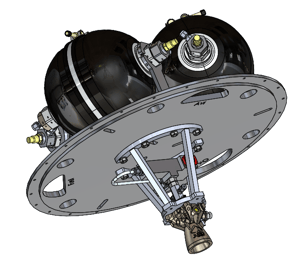
This is a really big milestone for us because to date we've done a lot of the technical de-risking for the technology that we're working on, which is this rotating detonation combustion propulsion system. The next step is to go out and prove that it works in space. And that's not a small feat.
It really marks the point from going from technology de-risking of our thruster prototype to developing a full product that's ready for commercial sale.
What is “flight heritage?”
With NASA TechLeap, as a part of this test, we are achieving what you mentioned: flight heritage. The big piece about flight heritage is that our customers, who we will sell propulsion systems to, want to see that our system can work in space. This test is essentially the proof point that allows us to go from scientific, technical de-risking to a commercially viable product.
How are you approaching the problem of toxic fuels in space flight?
Juno's first propulsion system is using a set of non-toxic propellants as compared to the state of the art, which uses a toxic fuel called hydrazine.
Hydrazine is a well worn and well understood fuel. However, it is very toxic to us humans, and because of that, we actually have to have special fueling facilities, which drive up the cost of that propulsion system and the complexity of logistics of that fueling process.
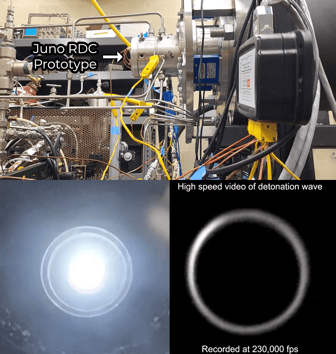
The reason we use hydrazine is it's actually the highest performing propulsion fuel that we have for in-space maneuvering. So at Juno we wanted to change that paradigm and say, what if we can use our rotating detonation combustion (RDC) technology to enable non-toxic fuels to be competitive performance-wise?
So using our RDC method, we are able to make our non-toxic propellant have a similar, specific impulse—that bang for your buck—while maintaining the benefits of being non-toxic.
How would that change impact customers?
Hydrazine is very expensive. With our fuels, we actually reduce the all-in cost of the propulsion system by a quarter of what it is today. We improve the size, weight, and power or swap and we ease the logistics chain to fueling your satellite, [for example]. So today you have to go to the launch site and pay a specific company to load that hydrazine into your satellite. With our fuel, we could actually load it at the satellite production facility and then have it ready to go for when the launch is scheduled.
How has Activate's funding and mentorship accelerated your journey and helped you overcome any critical challenges?
It's hard to overstate the impact that it has had on our company. Right now, we are just lightyears ahead of where we would have been without Activate's help.
Although we are now alumni, we still rely heavily on Activate’s continued support through its mentorship and community. We still communicate with our Managing Director for the Anywhere community and leverage the rubber stamp approval the fellowship gives for our credibility.
Why is this work important to you?
Not only is the technology itself really fun and cool to work on, it's also building toward a much greater vision of what we can do, especially in space. The most exciting thing about what we're trying to do is that we’re really building a road to space.
There are a lot of cool ideas that are just starting to bud into fruition right now, whether that's space stations asteroid mining, or reestablishing our human presence on the moon and even beyond. These are really hard things though; they require big changes and big steps in what technologies we have available today to be able to make them possible.
