

Moments that Matter: Enabling the Impossible through Biology, AI, and Community Collaboration
December 9, 2025
Celebrating the turning points that define our current and alumni fellows’ journeys.
Yunha Hwang and Andre Cornman (Tatta Bio, Cohort 2024) are forging new possibilities at the intersection of machine learning and biology. By developing tools to unlock genomic intelligence and building an exponentially growing database of genomic sequences, the team aims to leverage the diversity of microbial genomes to accelerate biological research and unlock new biology-based solutions.
Co-founders Hwang and Cornman—an environmental microbiologist and a machine learning engineer—have approached Tatta Bio’s mission with flexibility, creativity, and clarity.
First, they established Tatta Bio as a scientific non-profit, supported by philanthropy, setting it apart from many for-profit counterparts in the biotech space. Hwang said this was a deliberate choice that will allow Tatta to stay firmly focused on open access and collaboration.
They’ve also maintained close ties to academia. Recently, Hwang started the Hwang Lab at MIT, where she is furthering her research as a Principal Investigator. At Tatta, she is now Chief Scientist and Cornman has taken on her previous role as CEO.
This opportunity for Hwang also meant moving Tatta Bio to Boston. Now, Hwang and Cornman are part of the Activate Boston Community (previously members of the Activate New York Community) and are benefiting from the biotech scene in Boston, especially as they work closely with ecosystem partners.
Tatta Bio’s latest milestone is the launch of SeqHub, a one-stop platform for searching sequences, annotating genomes, and sharing data. The tool is the result of a longstanding vision for Hwang, who once “dreamed of a single place where I could learn everything about my sequences.”
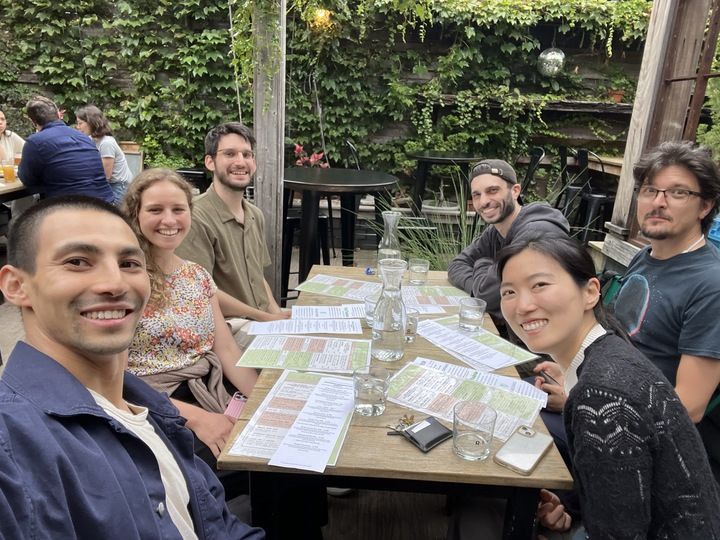 The Tatta Bio team at their onsite in Fall 2025. Image Credit: Tatta Bio
We caught up with Hwang and Cornman to hear more about SeqHub and their vision for Tatta Bio as their tools begin to make their way into the hands of scientists all over the world.
What would the world look like if we could harness biology to its full potential using Tatta Bio's technology?
Yunha Hwang: When we look at the diversity of microbes, the types of chemistry that microbes can do vastly outnumber the types of chemistry that humans can do in labs. In theory, there are so many reactions and new molecules that we can access using microbiology that we don't know how to access using synthetic chemistry.
So in a world where we can fully understand microbial genomes, we can also understand the full extent of biochemistry that we can access using microbes. And that's really cool because you're then moving away from the petrochemical-centric way of looking at synthetic chemistry and instead looking at a very biological and sustainable way of making new molecules, and new ways of building with atoms that we weren't able to do previously.
Andre Cornman: We're also really interested in making data available and making it more open. Right now a lot of researchers in academia and in industry have a huge amount of data, but it's siloed or dumped somewhere, and not really discoverable or accessible. If the data is not available, you can't really train machine learning models. You can't really discover things at scale. So a big part of our focus is to make data easily accessible and open so that we don't have this critical data bottleneck for biology.
What did it mean to you to launch your newest platform, SeqHub?
YH: A major win for us is that our models and tools are becoming useful as a scientific software that people use daily.
And that's personally meaningful to me because it's tackling a pain that was very, very palpable when I was doing research myself. Something that would have really annoyed me and blocked my research can now be solved by this tool that we've built, grounded in technology that we've been building together. Going back now as somebody building tools has been really rewarding.
SeqHub has only been out for a month and we’ve heard that it has already been a hit. Has anything surprised you so far?
YH: Interestingly, we expected our user group to be mostly based in the U.S. and Europe. But we just counted the users who signed up in the past month for SeqHub and they’re from more than 60 different countries. That's mind boggling to me because I don't know how they're finding us.
AC: We've grown a lot through just word of mouth. I think a lot of academics have found this tool really useful and have realized there isn’t anything like it that allows them to annotate a whole genome at once. We've seen a lot of academics sharing this new tool with their whole lab and getting really excited about it.
What kind of support are you looking for next?
YH: Working with ecosystem partners is a very, very important focus for us right now as we make sure that what we're building integrates well with existing initiatives. It’s usually research institutes and government funded institutes that manage this data and that make sure this data gets curated well. We’re always looking for more partners looking to make their data open and accessible.
When it comes to funding, we would love to get more support in terms of building this public resource for science. Funders who are actively thinking about the infrastructure and data problems in science, and who are familiar with projects like the protein data bank and want to see similar success stories in other aspects of science could be a really good fit for us in terms of fundraising.
What perspective would you share with someone thinking of making the jump from research to entrepreneurship?
YH: For me, these are big problems that I want to spend a long time working on. Depending on the problem you want to solve, I think you need to decide where you can be most impactful. And sometimes that's in the lab, doing that research on your own by hand, or leading a group to do it. Sometimes at different stages of that research, you might have to organize a bigger effort, or attack it from a policy perspective, or through entrepreneurial work, or at a for-profit startup.
AC: When I was first starting, I was working in a completely different field: self-driving cars. I got so excited talking to Yunha about these problems and figuring out how to predict function from sequence—I became deeply interested in the problem and couldn't let it go. I would say it was really about following my interest and being willing to dive in instead of just continuing on my current course.
Any parting thoughts?
YH: We often think of scientific discovery like a “lone genius” kind of story, but really it's the whole of humanity working together, building on top of each other.
At Tatta Bio, our assumption and belief is that every single scientist who is really invested in scientific advances wants to share and want to work with other people. And we are basically building the infrastructure and platform to accelerate that whole process and reimagine how individual scientists can contribute to the bigger “capital S” Science.
So we'll see if that hypothesis is correct or not. If it's true, we can enable things that we thought were previously impossible.
